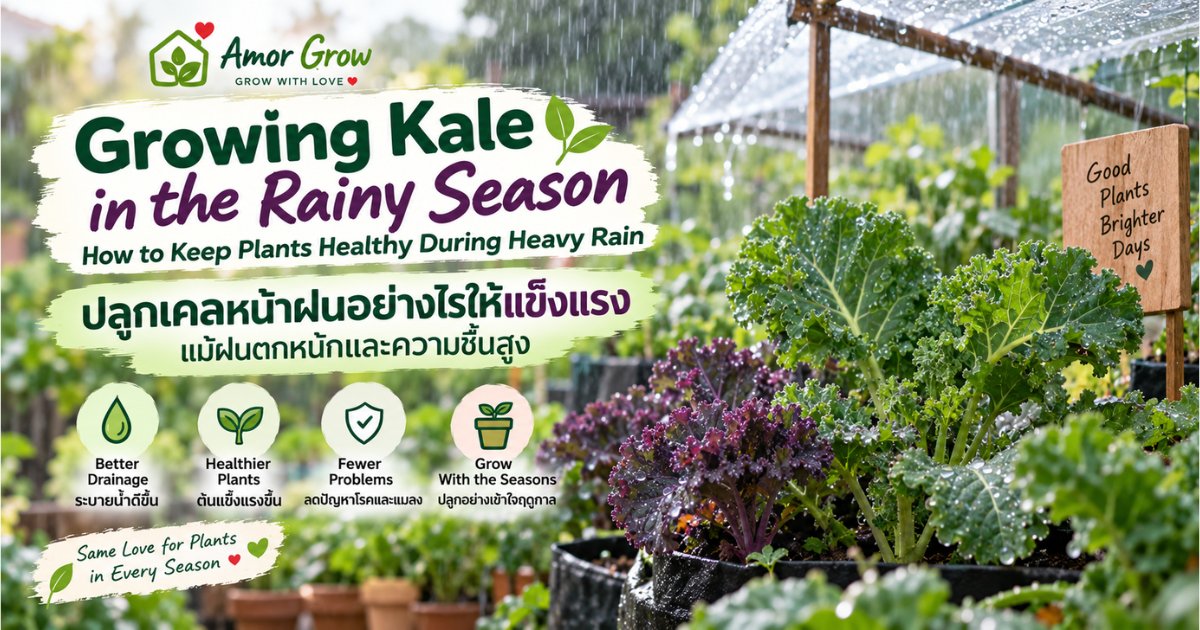
Growing Kale in the Rainy Season: How to Keep Plants Healthy During Heavy Rain
Heavy rain and high humidity can make growing kale more challenging. Learn how to manage drainage, watering, airflow, pests, leaf problems, and containers to keep your kale healthier throughout the rainy season.
In This Article
Rain can be wonderful for the garden—but when it rains heavily day after day, kale may begin telling you that it has had enough.
Leaves may stay wet for hours. Containers may remain soggy. Seedlings can be battered by heavy rain, and humid conditions can make certain plant diseases easier to develop and spread.
Does that mean you shouldn't grow kale during the rainy season?
Not necessarily.
The key is to stop thinking only about how much water kale receives and start paying attention to drainage, airflow, leaf wetness, plant spacing, and regular observation.
With a few adjustments, you can give your kale a much better chance of staying healthy through periods of heavy rain.
Why Is the Rainy Season Challenging for Kale?
Kale needs water to grow, but there is a big difference between adequately moist soil and soil that remains saturated for long periods.
During prolonged rainy weather, several things can happen at the same time:
- Soil and potting mix may remain wet for too long.
- Roots may receive less oxygen in waterlogged growing media.
- Leaves may remain wet for extended periods.
- High humidity and prolonged leaf wetness can favor some plant diseases.
- Heavy rain can physically damage young leaves and seedlings.
- Slugs, snails, caterpillars, and other pests may become more noticeable.
- Nutrients can be lost from containers through repeated heavy rainfall and drainage.
The solution isn't to keep your kale completely dry. Instead, the goal is to help excess water leave quickly while allowing the plant and its leaves to dry appropriately between periods of rain.
1. Drainage Comes First
If there is one thing to check before a period of heavy rain, make it drainage.
Kale roots need both moisture and oxygen. When the growing medium remains saturated for too long, air spaces become filled with water and roots can become stressed.
For container-grown kale, make sure:
- The pot has adequate drainage holes.
- Drainage holes are not blocked by soil, roots, or debris.
- The pot isn't sitting permanently in a saucer filled with rainwater.
- The growing medium drains reasonably well rather than remaining dense and waterlogged.
If possible, raise containers slightly above the floor so water can drain freely underneath them.
2. Don't Water Automatically Just Because It's Watering Day
A watering schedule is useful—but the plant and soil should make the final decision.
If it has been raining regularly, your kale may not need additional watering at all.
Before reaching for the watering can, check the growing medium with your finger. If it still feels adequately moist below the surface, wait and check again later.
This is especially important with containers sheltered from some rain but still exposed to high humidity. The surface may look dry while the lower part of the pot remains very wet.
Water according to the condition of the soil, not simply according to the calendar.
3. Give Kale Enough Space
When we grow vegetables in a small area, it's tempting to squeeze in one more plant.
During humid weather, however, crowded plants can reduce airflow between leaves.
Better spacing allows air to move around the plants and helps foliage dry more readily after rain.
If kale plants have grown into one another, consider rearranging containers or removing unnecessary damaged lower leaves rather than allowing a dense mass of foliage to remain constantly wet.
Avoid excessive pruning, however. Kale still needs healthy leaves for photosynthesis and continued growth.
4. Should You Put Kale Under a Rain Cover?
If your growing area receives repeated heavy downpours, a transparent rain cover can be useful—but only when it is designed correctly.
The purpose isn't to create a sealed greenhouse. It is simply to reduce the amount of direct rain hitting the plants and containers.
A useful rain shelter should:
- Protect plants from the heaviest direct rainfall.
- Remain open enough on the sides for good airflow.
- Allow sufficient light to reach the plants.
- Not trap excessive heat and humidity around the foliage.
A completely enclosed plastic structure can create another problem: stagnant, hot, humid air.
Think roof rather than sealed room.
5. Keep an Eye on the Lower Leaves
Older leaves near the soil are often useful indicators of what's happening with the plant.
Inspect them regularly for:
- Yellowing
- Unusual spots or lesions
- Damaged or rotting tissue
- Leaves touching constantly wet soil
- Pest eggs or feeding damage
A single older yellowing leaf does not automatically mean the entire plant is sick. But rapid yellowing, spreading spots, wilting despite wet soil, or widespread tissue damage deserves closer attention.
Remove badly damaged or decaying leaves using clean tools, and don't leave diseased-looking plant debris around your growing area.
6. Wet Leaves Aren't Automatically a Disaster
Rain naturally makes leaves wet. The bigger concern is when foliage remains wet for long periods while air circulation is poor.
You can't stop every raindrop, but you can improve the conditions around the plant.
Give plants adequate spacing, avoid unnecessary overhead watering during already-wet weather, and keep the growing area reasonably ventilated.
If you do need to water during a break in the rain, direct the water toward the growing medium rather than unnecessarily soaking the foliage again.
7. Rainy Weather Can Bring Hungry Visitors
You're not the only one interested in your kale.
During wet weather, regularly inspect plants for chewing damage and pests such as slugs, snails, and caterpillars.
Look underneath the leaves as well as on top. Small caterpillars and eggs can be surprisingly easy to miss.
Rather than automatically spraying the entire plant, start by identifying what's causing the damage.
In a small home garden, hand-picking pests, removing egg clusters, using appropriate barriers, and checking plants frequently can prevent a small problem from becoming a major infestation.
8. Be Careful With Fertilizer During Heavy Rain
Heavy rainfall can wash nutrients through containers, but that doesn't mean you should immediately compensate with large amounts of fertilizer.
Overfertilizing stressed or waterlogged plants can create additional problems.
First make sure drainage is working and the roots are not sitting in saturated growing media.
Once conditions improve and the plant is actively growing, return to an appropriate feeding routine for the fertilizer you use.
Follow the product instructions rather than increasing the concentration because it has been raining.
9. Protect Young Kale Seedlings
Established kale can tolerate more physical stress than tiny seedlings.
Heavy tropical downpours can flatten young plants, splash growing media onto their leaves, or disturb newly planted seedlings.
If severe rain is expected, consider moving small containers temporarily to a bright, protected location or providing a simple overhead rain shelter while maintaining good ventilation.
After heavy rain, check whether seedlings have been pushed over and gently support them if necessary.
10. Growing Kale in Containers Can Actually Be an Advantage
Containers require careful moisture management, but they also give home gardeners flexibility.
When several days of heavy rain arrive, you may be able to move pots to a protected location. When conditions improve, they can return to their normal growing area.
You can also adjust the spacing between individual plants much more easily than with a fixed garden bed.
For gardeners dealing with unpredictable rainy-season weather, that flexibility can be valuable.
After Heavy Rain: A 5-Minute Kale Check
You don't need to perform complicated garden maintenance every time it rains.
After a particularly heavy downpour, spend a few minutes checking:
- Pot: Is water draining freely?
- Soil: Is it moist or completely saturated?
- Leaves: Are there new spots, yellowing, or physical damage?
- Undersides: Any eggs, caterpillars, slugs, snails, or other pests?
- Stem: Is the plant standing firmly?
- Spacing: Are neighboring plants becoming too crowded?
Catching a problem today is much easier than discovering a severely affected plant a week later.
What If Your Kale Starts Turning Yellow?
Don't immediately assume it needs fertilizer.
Yellow leaves can have several causes. During periods of heavy rain, check soil moisture and drainage first.
Also consider the age of the leaf, root condition, nutrition, pests, and possible disease symptoms.
If only one of the oldest lower leaves turns yellow while the rest of the plant is healthy and producing new growth, it may simply be an aging leaf.
If many leaves begin yellowing quickly or the plant is wilting while the soil remains very wet, investigate further.
What If You Find Spots on the Leaves?
Not every spot has the same cause.
Leaf damage can result from physical injury, pests, nutrient problems, or different plant diseases.
Instead of treating every spot with the same product, look at the entire plant:
- Where did the spots first appear?
- Are they spreading?
- Are several plants affected?
- Are the leaves remaining wet for long periods?
- Are there insects or eggs nearby?
Correct identification is more useful than immediately applying a pesticide or fungicide.
Don't Try to Make the Garden Completely Dry
Rain is part of the growing environment.
The goal isn't to prevent kale from ever getting wet. It's to prevent conditions where roots remain waterlogged, leaves stay wet unnecessarily long, and air cannot circulate around the plants.
Think of rainy-season kale care as managing the environment rather than fighting the weather.
Rainy-Season Kale Care in One Simple Routine
Check → Drain → Space → Protect → Observe → Adjust
Check the plants regularly.
Make sure excess water can drain.
Give leaves enough space for airflow.
Protect vulnerable seedlings from severe downpours.
Observe leaves for pests and unusual symptoms.
Then adjust your watering and care according to what the plant is telling you.
Can You Grow Kale During the Rainy Season?
Yes—but rainy-season growing requires a different mindset from growing during drier weather.
You may water less frequently. You may need to check drainage more often. You may spend more time looking underneath leaves. And during periods of persistent heavy rain, a simple rain shelter may become useful.
Those adjustments are part of learning to grow with the seasons.
At Amor Grow, we believe successful gardening isn't about controlling every part of nature. It's about learning how plants respond to their environment and adjusting the way we care for them.
Observe your plants. Understand the season. Adjust your care. And keep growing. 🌱
Note: Plant symptoms can have multiple causes. This article provides general gardening guidance and is not a substitute for identifying a specific pest, disease, or growing problem affecting an individual plant.